What Is Mountain Modern Interior Design? A Summit County Designer's Definition
Q: What Does Mountain Modern Interior Design Mean?
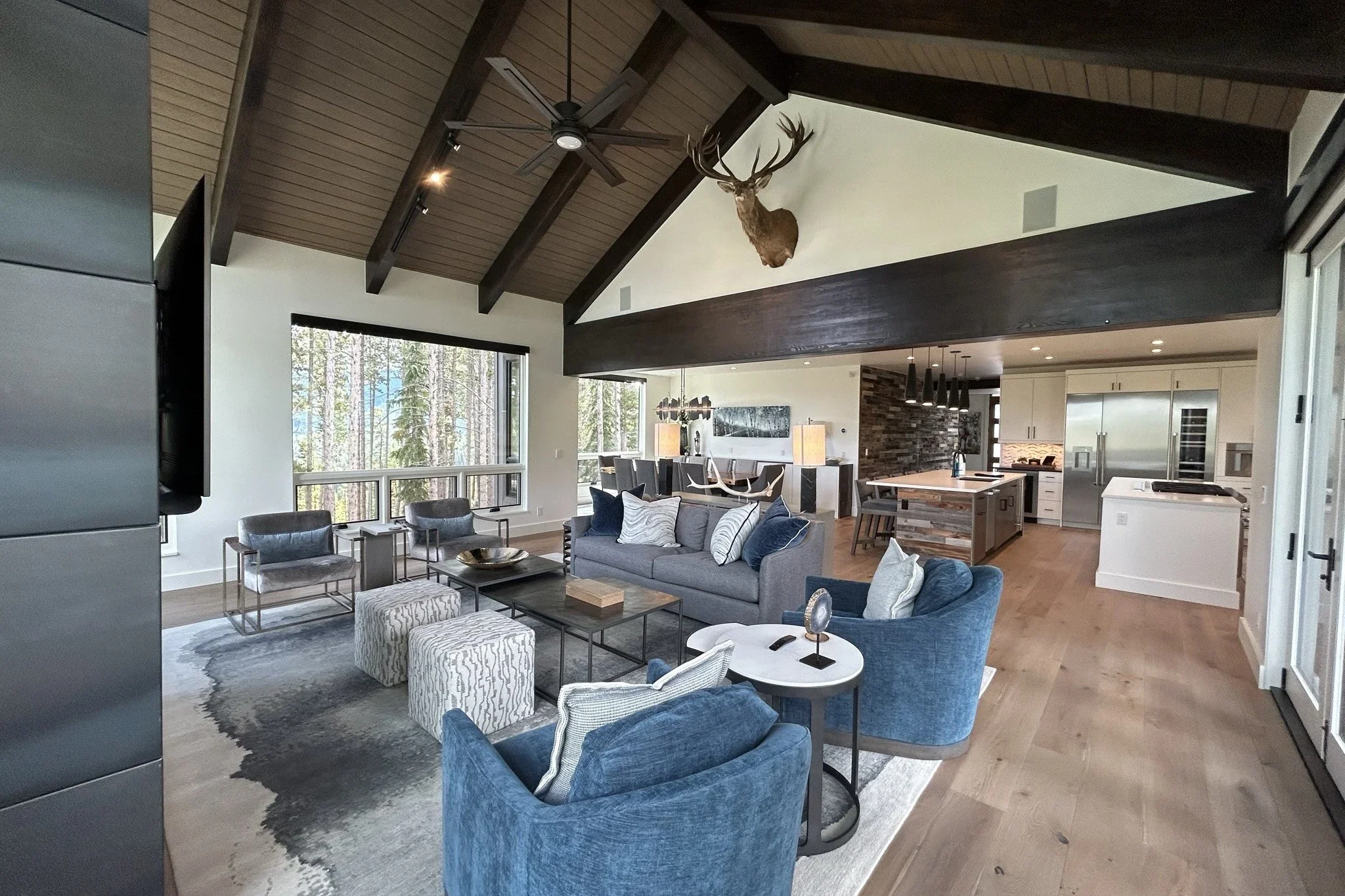
Mountain modern interior design blends clean architectural lines with the warmth, texture, and durability a mountain home needs. The best version feels connected to the landscape without becoming lodge-themed: natural materials, generous light, thoughtful space planning, layered furnishings, and rooms that feel refined, personal, and easy to live in.
The coldest mountain homes are usually the ones trying hardest to look modern. Everything is technically "clean," but nothing invites you to sit down after a ski day, host friends for dinner, or watch the light move across the room in the afternoon.
That is where mountain modern design gets interesting. It is not a formula. It is a balance.
Mountain Modern Interior Design Balances Clean Lines with Mountain Warmth
Mountain modern interior design works best when the architecture feels calm and the materials feel alive. Think simple forms, edited details, and open sightlines, paired with wood grain, stone, wool, leather, plaster, layered lighting, and pieces with real texture.
Modern mountain homes do not need antler chandeliers or heavy lodge furniture to feel connected to place. They also do not need to be all glass, steel, and gray. The stronger approach is quieter: let the mountains influence the palette, the scale, the materials, and the way each room supports daily life.
In practice, that often means:
Clean-lined furniture with tactile fabrics
Natural stone that feels grounded rather than flashy
Wood tones that add warmth without overwhelming the room
Lighting that softens strong architecture
Windows and sightlines that treat the view as part of the design
Furnishings that can handle real use from family, guests, and seasonal living
The result should feel current, but not trendy. It should feel polished, but not staged.
The Style Starts with the Land, Not a Mood Board
A mountain home has a job before a design style ever enters the room: it has to respond to its setting. Snow, altitude, bright light, long views, gear, guests, and seasonal routines all shape how the home should work.
That is why strong modern mountain home design starts with questions like:
Where does the morning light land?
Which view should the furniture face?
How do guests move from entry to kitchen to great room?
Where do wet boots, coats, skis, and bags go?
Which spaces need to feel open, and which should feel tucked away?
What materials can handle use without looking worn out too quickly?
Elle J Design describes its work as "from blueprint to bliss," which is a useful way to think about this style. The most successful rooms are not created by choosing a sofa after construction is complete. They are shaped by early decisions: floor plan, lighting plan, furniture layout, finish palette, and how every selection supports the way the home will be used.
For a second home in Breckenridge, Frisco, Silverthorne, Dillon, Keystone, or Vail, that early planning matters even more. The home may need to welcome extended family one weekend, feel quiet for two people the next, and hold up to a full holiday house without feeling chaotic.
Warmth Comes from Texture, Scale, and Light
Warmth is not just a color palette. In mountain modern interiors, warmth comes from how the room feels at full scale.
Wood is part of it, but wood alone is not enough. A room can have beams, floors, and cabinetry and still feel flat if the lighting is harsh or the furniture scale is wrong. Stone is part of it, but stone can feel cold if it is paired with thin fabrics, stark walls, and no softness.
A better question is: what will make this room feel good at 7 p.m. in January and at 10 a.m. in July?
Good warmth comes from layers:
Material warmth: wood, stone, plaster, wool, leather, linen, and natural fibers
Visual warmth: contrast, shadow, depth, and pieces with shape
Physical warmth: comfortable seating, rugs underfoot, and lighting that lands where people gather
Emotional warmth: rooms that feel personal, collected, and specific to the people who live there
Recent mountain-home trend coverage has pointed in the same direction: away from cold, perfect rooms and toward interiors with more warmth, intention, and places to gather or retreat. That does not mean mountain modern is becoming cluttered. It means the best spaces are becoming more human.
Mountain Modern Is Not the Same as Lodge Style
Mountain modern and lodge style can both use natural materials, but they tell different stories. Lodge style often leans into rustic nostalgia. Mountain modern is more edited. It respects the setting without turning the home into a theme.
Traditional lodge: heavy timber, dark leather, wildlife motifs, rustic fixtures. Where it can go wrong: it can feel themed, dated, or visually heavy.
Minimal modern: clean lines, pale palette, glass, steel, sparse furnishings. Where it can go wrong: it can feel cold or disconnected from the mountains.
Mountain modern: clean architecture, warm texture, natural materials, livable scale. Where it can go wrong: it can fall flat if the layout, lighting, or material balance is ignored.
The sweet spot is contrast. A room might have a clean-lined sofa, a substantial stone fireplace, soft woven textiles, sculptural lighting, and a wood tone that echoes the surrounding trees without copying them literally.
That mix is what keeps the room from feeling like a hotel lobby or a cabin set. It gives the home a real point of view.
Not sure which of these styles fits you? Our interior design style quiz takes about two minutes.
The Layout Matters as Much as the Finishes
Paint, furniture, tile, and lighting all matter, but the layout decides whether the home actually works. This is where mountain modern interior design overlaps with space planning.
A great room can be beautiful and still fail if the seating does not face the view, if the walkway cuts through the conversation area, or if the fireplace, windows, and TV all fight for attention. A primary suite can look calm in photos and still feel awkward if the bed wall, window placement, lighting, and closet access do not work together.
Before choosing finishes, a designer should be asking:
How should people move through this room?
What should they see first?
Where will they sit, gather, read, unload, cook, or recover from the day?
Which decisions become expensive to change later?
Which details need to be coordinated with the architect, builder, or trade partners now?
That last question matters. Elle J Design's layout design and space planning services include review and enhancement of floor plans, preliminary furniture layouts, electrical plans, renderings, and discussions around layout, fixtures, and finishes. That is not decoration after the fact. It is design while the home is still flexible.
How Elle J Design Approaches Mountain Modern Homes in Summit County
Elle J Design is a full-service space planning and interior design firm based in Summit County, Colorado. The studio's public project portfolio includes full remodels in Breckenridge and Frisco, along with custom spec homes in Frisco, which gives the team a practical view of how mountain homes need to function, not just photograph.
The studio's approach is less about trends and more about solving specific problems:
Why a room feels cold, and what would warm it up
Where the floor plan is fighting the furniture
How one finish decision affects the entire home
Why the designer should be involved before the build is too far along
How to make a second home feel personal without making it precious
That is the difference between inspiration and execution. A mood board can show the look. A designer turns that look into a home that works.
If you are planning a Summit County mountain home and trying to make early layout, finish, or furnishing decisions, you can start the conversation with Elle J Design before those choices become harder to change.
FAQs About Mountain Modern Interior Design
Do You Design Mountain Modern Homes in Breckenridge and Summit County?
Yes. Elle J Design is based in Summit County and works on mountain homes across Colorado, including Breckenridge, Frisco, Silverthorne, Dillon, Keystone, and nearby markets. The studio focuses on space planning, interior design, furnishings, and finish selections for custom homes, full remodels, and vacation homes.
Can Mountain Modern Design Still Feel Warm?
Yes. Warmth comes from texture, proportion, lighting, material contrast, and how the room supports real life. A mountain modern home can have clean lines and still feel inviting when wood, stone, textiles, furnishings, and lighting are layered with intention.
Is Mountain Modern the Same as Rustic Modern?
Not exactly. Rustic modern usually leans more heavily on rugged or cabin-inspired materials. Mountain modern can include rustic texture, but it is typically cleaner, more edited, and more architectural. The goal is to feel connected to the mountains without becoming themed.
Should I Hire a Designer Before Construction Starts?
For a mountain home, early design involvement can prevent expensive rework. Space planning, electrical plans, furniture layouts, lighting, and finish direction all affect construction decisions. Bringing a designer in early helps the architecture, interiors, and daily function work together.
Final Takeaway
Mountain modern interior design is not about copying a look. It is about designing a home that belongs in its setting, supports the way you live, and still feels timeless once the trend cycle moves on.
The best version has clean lines, but it is not cold. It uses natural materials, but it is not a cabin cliche. It feels refined, but still relaxed enough for wet boots, family dinners, quiet mornings, and the kind of mountain life people actually want.