Vacation Home Interior Design: How Out-of-State Owners Finish a Summit County Home
Q: How Does Vacation Home Interior Design Work If I Live Out of State?
Vacation home interior design runs mostly on planning, renderings, shipped samples, and a steady decision rhythm, with a designer handling everything local: site visits, builder coordination, deliveries, and installation. Owners typically travel for a few milestones and approve the rest remotely, so the home gets finished without the owner living nearby.
For most Summit County second homes, that model is how the work gets done, because most of the owners are somewhere else most of the time.
Spend a Tuesday in Breckenridge in October and you can feel it: a large share of the homes here are second homes. The National Association of Home Builders counts about 6.5 million second homes in the United States, concentrated heavily in resort counties like this one. Designing here means designing for owners in Denver, Dallas, Houston, and Chicago, and the process has evolved to fit.
A Second Home Has a Different Job Than a First Home
A primary residence gets designed around a daily routine. A vacation home gets designed around a different question: what do we want this place to be for the next twenty years?
For many owners, the honest answer is the family gathering place. The house where college kids still show up for ski week. The base for the years when work loosens its grip. Eventually, the house the grandkids beg to visit. That job description changes the design brief:
Sleeping arrangements that flex between two people and twelve
Gathering spaces that hold the whole group at dinner
Storage for gear that lives at the house year-round
Materials that handle guests without demanding a lecture about coasters
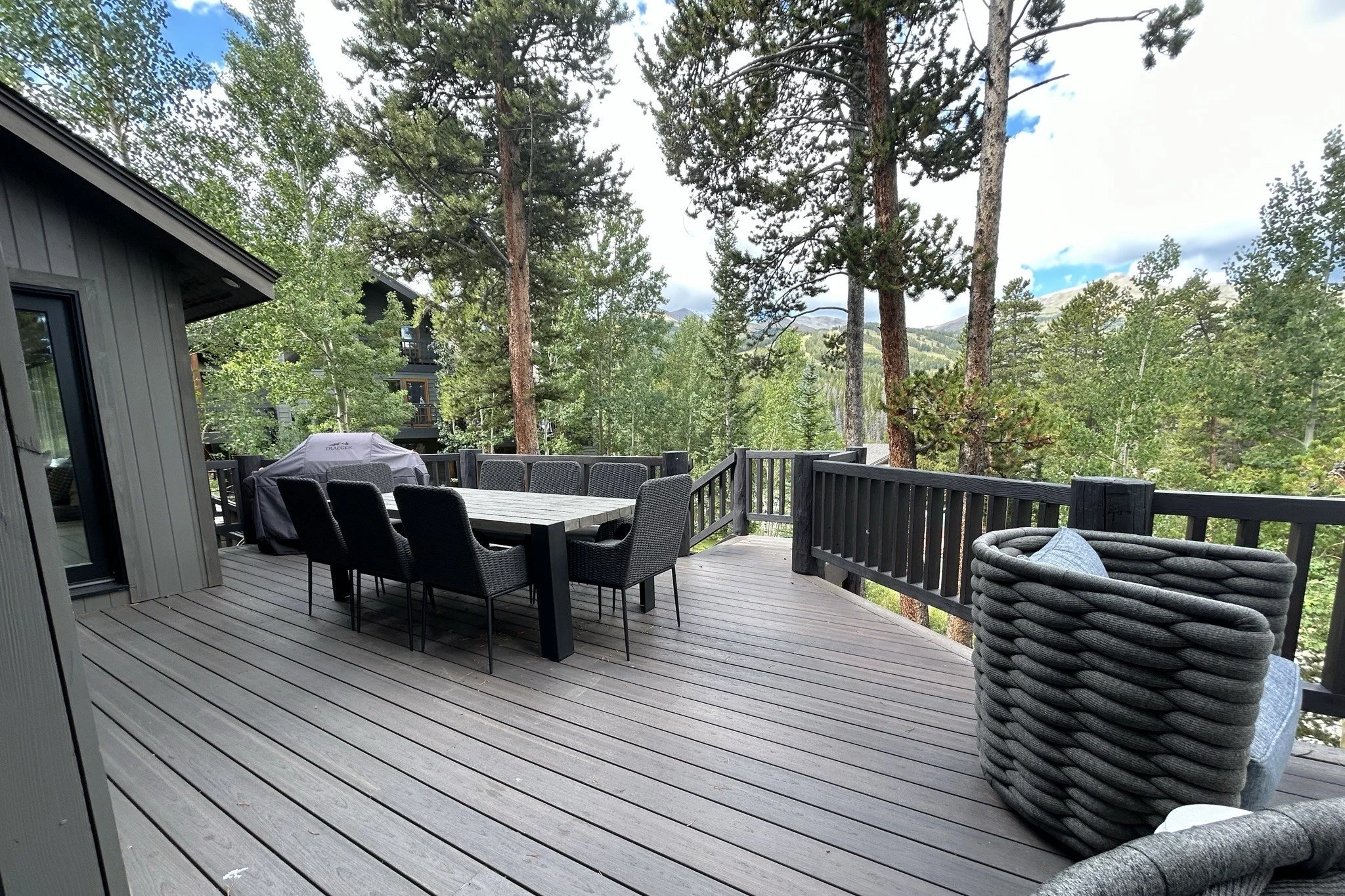
Rooms that work in ski season and in July, because Summit County summers are half the reason people stay
A second home also has to earn a higher bar: it competes with every other place the family could spend that week. It needs to feel like a reward the moment they walk in, not a to-do list. The style conversation changes with it; most owners want the house to feel like the mountains without turning into a theme, the balance the studio covers in its post on mountain modern interior design.
Good Vacation Home Interior Design Starts with Arrival
Owners experience a vacation home differently than a primary home. They arrive. Again and again, often after six weeks away, usually at night, usually tired from the drive up the mountain.
The best second-home designs take that arrival seriously:
An entry that absorbs bags, coats, and boots instead of spreading them into the living room
Lighting that makes the house feel awake and warm within a minute of walking in
A great room that is ready to host without an hour of resetting
Bedrooms that are made-up-and-waiting by default, not by effort
Closed storage for the owners' things, so the house feels personal even when guests cycle through
It all comes from layout and storage decisions made early, which is why the studio's post on mountain home space planning argues for solving the plan before the furniture. In a second home, the plan is also what makes the house low-maintenance enough to enjoy.
What Happens Remotely and What Needs Someone on the Ground
The workable split in a remote project is clearer than most owners expect. The American Society of Interior Designers has noted that virtual meetings and remote workflows are now a permanent part of the design process, and second-home markets are where that shift pays off most.
| Handled Remotely | Needs Someone Local |
| :---- | :---- |
| Discovery, wishlists, and design direction | Site documentation and measurements |
| Floor plan and furniture layout reviews | Meetings with the builder and trades |
| Renderings and design presentations | Checking work against the drawings |
| Finish and fabric approvals from shipped samples | Receiving, inspecting, and storing deliveries |
| Budget reviews and order approvals | White-glove delivery and installation |
| Video walkthroughs at key moments | The final walk-through and punch list |
Almost every decision can happen from anywhere; almost everything physical cannot. A designer based in Summit County matters more for a vacation home, not less. Someone has to stand in the room.
Decisions Are the Real Distance Problem
Ask owners what stalled their last remote project and it is rarely the miles. It is the decisions: a hundred of them, arriving unpredictably, each one waiting on a couple who are busy running lives somewhere else.
Distance turns small delays into big ones. A finish question that a local owner settles with a Saturday visit can sit for three weeks in an inbox, and construction does not wait politely. The fix is not more meetings. It is structure:
Decisions arrive batched and scheduled, so owners can plan real time for them
Every choice comes with a recommendation and the reasoning, not a raw catalog
Renderings and samples do the traveling, so approvals are informed, not guesses
Deadlines are visible, so everyone knows which decisions are holding the schedule
That structure is most of what separates a smooth out-of-state project from a stressful one. The owners still make the calls. They just stop being the bottleneck.
A Clear Process Protects Owners Who Cannot Drop By
When you live in the same town as your project, you can compensate for a vague process by showing up. Out-of-state owners have no such safety net. The process is the safety net.
Elle J Design runs projects through a defined framework, from an initial consultation call through design, construction support, and a final detailed walkthrough. The studio works as an advocate for its clients, and for remote owners that advocacy is concrete: someone local who reads the drawings, attends the meetings, watches the details, and keeps communication on a steady rhythm so the owners are never guessing what is happening at 9,000 feet.
Budget behavior matters just as much at a distance. Clear scopes, tracked orders, and honest conversations about where the money goes are what keep a remote project from producing the one thing every out-of-state owner dreads: the surprise.
How Elle J Design Works with Out-of-State Owners in Summit County
Elle J Design is a full-service space planning and interior design firm based in Summit County, with projects across Breckenridge, Frisco, Dillon, and the Vail Valley, including full remodels in Breckenridge and Frisco custom spec homes. Living and working here is part of the service: the studio sees the site in February conditions, knows what mountain construction schedules do, and is twenty minutes away when something needs eyes on it.
The rhythm with out-of-state owners is straightforward. Travel for the moments that deserve it. Decide from anywhere with renderings, samples, and clear recommendations. Let the studio carry the local weight in between, through design, construction, furnishing, and installation.
If you are closing on a Summit County place, or own one that has never quite been finished, the best time to set up that rhythm is before the next round of decisions starts. You can start the conversation with Elle J Design from wherever you happen to be reading this.
FAQs About Vacation Home Interior Design
Do You Design Vacation Homes in Breckenridge and Summit County for Out-of-State Owners?
Yes. Elle J Design is based in Summit County and regularly works with second-home owners living out of state or on the Front Range. The studio handles design, builder coordination, furnishings, and installation locally while owners review and approve remotely.
Can the Whole Design Process Really Happen Remotely?
Most of the vacation home design process can happen remotely. Design presentations, renderings, shipped finish samples, budget reviews, and video walkthroughs handle the decision side from anywhere. The physical side, like site meetings, deliveries, and installation, is handled by the studio in Summit County.
How Often Do We Need to Travel to the House During a Project?
There is no fixed travel requirement. Many owners come for a small number of milestones, such as the initial walkthrough and the installation, and handle everything else remotely. The right cadence depends on the project's scope and the owners' schedules.
When Should We Bring in a Designer for a Second Home?
Bring a designer into a second home earlier than feels natural, ideally while plans are still flexible. Early involvement lets space planning, finishes, and furnishings work as one project, which matters even more when the owners cannot visit the site often to course-correct.
Final Takeaway
Vacation home interior design is not primary-home design done at a distance. It is its own discipline: a house designed for arrival, for flexing between two people and a full family, and for being decided on from somewhere else.
The owners bring the vision and the decisions. The designer brings the structure, and the local presence that lets a Summit County home get finished beautifully while its owners live their lives hundreds of miles away.
Done well, it is the most comfortable way to bring a second home from blueprint to bliss.